

THANK YOU FOR SUBSCRIBING


Logistics Tech Outlook Weekly Brief
Be first to read the latest tech news, Industry Leader's Insights, and CIO interviews of medium and large enterprises exclusively from Logistics Tech Outlook
This article is part of Logistics Tech Outlook's Innovation Insights series featuring expert contributions nominated by our subscribers and reviewed by our editorial team.
HVLS fans (our product name "EMIAS FANS") are already widely used in many countries around the world, but we would like to explain the principle and effects again. HVLS stands for High-Volume Low-Speed, and the large air volume generated by rotating a large ceiling fan of up to 7.3m in diameter slowly circulates air and greatly improves the working environment in a warehouse, covering an area of approximately 2000 m2 with a single fan. The 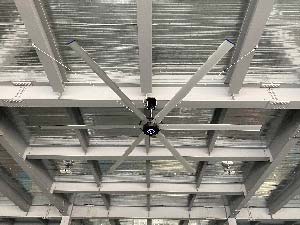 effects include measures against heat stroke, dew condensation, mold and rust, bird damage, etc. In Japan, it is especially well known as a product to prevent heat stroke. (It is widely known that Japan's uniquely humid summer heat is a problem for many foreign tourists.) The wind generated by the HVLS fans gently caresses the skin of workers in the warehouse, and by depriving them of vaporization heat, it has the effect of lowering the temperature they feel by about 5°C. The reason for the introduction of HVLS fans is that logistics centers have high ceilings, which makes the capital investment cost of air conditioning too large even if one wanted to install it, and air conditioners use refrigerant gases such as chlorofluorocarbon gas, which has a large environmental impact.

LOGIAS JAPAN is working to reduce total energy costs with an eco-system that utilizes wind and water.
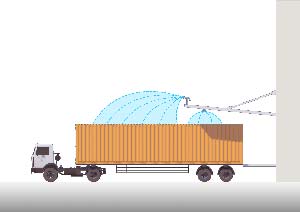
The combination of our "EMIAS FANS" and "Container Cooling System" has already been introduced at various sites and is highly evaluated.
LOGIAS JAPAN is working to reduce total energy costs with an eco-system that utilizes wind and water.


The articles from these contributors are based on their personal expertise and viewpoints, and do not necessarily reflect the opinions of their employers or affiliated organizations.


