
THANK YOU FOR SUBSCRIBING


Logistics Tech Outlook Weekly Brief
Be first to read the latest tech news, Industry Leader's Insights, and CIO interviews of medium and large enterprises exclusively from Logistics Tech Outlook


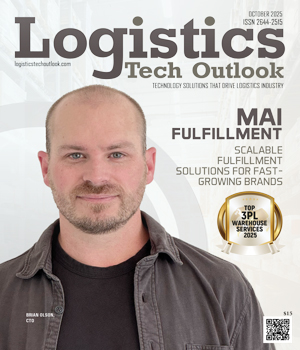
 Brian Olson, CTO
Consider an up-and-coming apparel brand that launches a new collection online. Within hours, everything sells out. Excitement peaks, only to give way to chaos as orders stack across different warehouses, each running its own system. Inventory counts are misaligned, labels are misprinted, and customers wait longer than promised. What should have been a breakout moment becomes a scramble. This is the reality for many growing D2C brands.
MAI Fulfillment converts operational headaches into scalable and profitable growth engines, helping brands of all sizes reach their full potential. With its in-house, custom-built, omnichannel WMS, the company orchestrates the entire fulfillment lifecycle, from D2C orders to retail, wholesale, and FBA operations, while also offering consultative guidance through compliance, integration, and operational alignment.
“As a technology-first 3PL, we approach fulfillment operations as both a technology challenge and a growth strategy. Our goal is simple: keep orders on time, inventory accurate, and customers happy,” says Brian Olson, CTO.
While leadership provides vision and strategy, it is the staff on the ground who execute daily operations and transform that vision into tangible results. They are the stars of the organization, ensuring that every order is handled accurately, efficiently, and with care.
Built Around the Customer
MAI’s WMS platform is designed with direct customers in mind. Unlike many warehouses that rely on outsourced software or off-the-shelf solutions, the company dictates the flow, design, and data structure of its platform. This level of ownership allows the team to respond rapidly to customer requests, building new features or fixes in days rather than months.
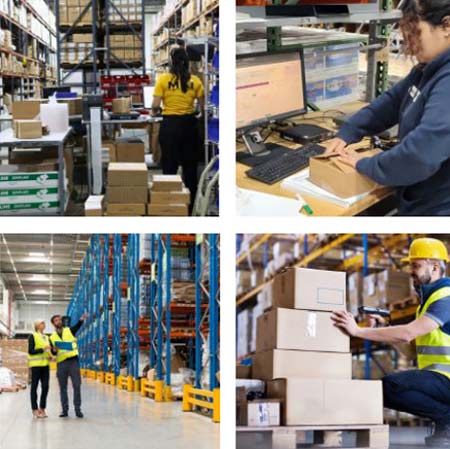 A core component of MAI’s platform is its flexible integration layer, designed to solve one of the biggest challenges in the market: connecting e-commerce platforms and ERP systems at scale. Off-the-shelf connectors often fail because they don’t account for how companies actually use platforms like Shopify or NetSuite. MAI’s integration layer adapts to each customer’s workflows, ensuring both accuracy and efficiency.
For instance, some customers use dynamic carts with bundled items, and Shopify stores this data in fields outside the order line item, which breaks most standard connectors. MAI’s WMS can reconfigure the Shopify integration to capture that exact data flow. NetSuite, meanwhile, is integrated using custom logic tailored to each client's specific needs. Since MAI owns the integration layer, adjustments can often be implemented within 24 hours, avoiding long external development queues.
Another feature that sets MAI apart is its in-house, rules-based automation engine. It translates complex or inconsistent customer data into actionable workflows, enabling rapid onboarding without extensive custom coding, while still allowing for complete customization to meet unique scenarios. Equally important is MAI’s commitment to data transparency. The system provides visibility down to the shelf, bin, pallet, and lot-code level, simplifying both communication and execution. For example, a client can identify a specific lot code in real time and request it for inspection, confident that the warehouse team is viewing the same information.
The platform’s rapid development cycles, cloud-based hosting, and modern tools, such as AWS and Kubernetes, enable zero-downtime deployments and transparent updates. Customers stay fully informed, and warehouse operations continue uninterrupted. Updates and new features can be rolled out seamlessly, even in the middle of the day, without disrupting warehouse operations or client workflows. Any active jobs continue uninterrupted, transitioning automatically to the updated system without affecting users.
Such operational excellence sets the standard from day one, and MAI brings the same precision to onboarding every client.
MAI follows a meticulously designed onboarding roadmap to ensure every client derives maximum value from its WMS platform. When a new customer comes on board, they engage with the company’s highly skilled technical team, receiving a comprehensive overview of the platform. Beyond videos standard training and instructional videos, MAI customizes the process for each client, walking them through scenarios specific to their operations, customer base, and business needs.
The Human Engine Behind MAI
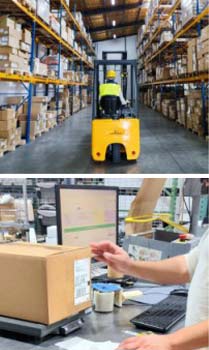 MAI’s seamless onboarding, combined with top-of-the-line technology, is further enhanced by hands-on, consultative support.
“While leadership provides vision and strategy, it is the staff on the ground who execute daily operations and transform that vision into tangible results,” says Olson. “They are the stars of the organization, ensuring that every order is handled accurately, efficiently, and with care.”
MAI’s operations are organized into dedicated ‘pods,’ each led by an account manager embedded directly within the warehouse. These pods develop a deep understanding of a customer’s products, requirements, and clients, enabling them to execute both retailer and direct-to-consumer orders with precision. If operational challenges arise, customers can interact directly with their account manager on-site rather than through a remote call center, fostering immediate responsiveness and stronger collaboration.
This people-first approach extends to technology integration. Weekly operations meetings bring together the management team to review the performance of the WMS platform and identify enhancements driven by frontline feedback. By incorporating insights from those who use the system every day, MAI ensures its solutions remain highly adaptive, customer-centric, and aligned with real-world operational needs.
Hybrid Fulfillment Made Simple
One fast-growing brand recently acquired by a parent company initially partnered with MAI for traditional physical fulfillment. After the acquisition, the parent company approached MAI with a new challenge: integrating real-time fulfillment of customizable, print-on-demand products alongside their physical goods.
MAI acted as both a technology consultant and execution partner, designing a custom API layer to manage communication between MAI’s WMS and the client’s systems. It also enabled digital printouts to be paired with physical products at scale and in real time by implementing the required hardware infrastructure in its warehouse.
By bridging digital and physical processes in real time, MAI eliminated operational complexity and empowered them to launch a completely new sales channel, opening the door to a whole new market opportunity.
The same operational agility became a competitive advantage in navigating rapid shifts in retail.
Pivoting at the Speed of Retail
Every new turn in retail tests a brand’s resilience, and MAI’s agility ensures its clients never miss a step. When Amazon recently stopped offering in-house FBA prep services, thousands of sellers were forced to look externally for compliant solutions. MAI already positioned itself with workflows and integrations to absorb that demand, prepping inventory for FBA on behalf of its clients.
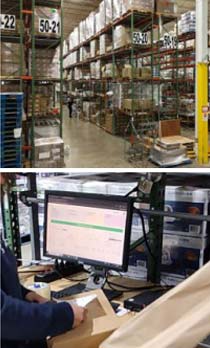 This adaptability extends well beyond FBA. As new retailers and wholesalers emerge with unique compliance requirements, the company quickly configures the necessary services and systems to support them. Brands often come to MAI after struggling with warehouses that can’t keep pace, and its flexible solutions and ability to handle complex workflows make it a preferred partner for growth-stage companies aiming to scale without friction.
Looking past today’s hurdles, MAI is already shaping the future of fulfillment with intelligent automation and AI-powered insights.
The AI-Driven Warehouse of Tomorrow
The company is now focused on integrating cutting-edge technologies that will redefine fulfillment operations over the next 24 months. Robotics is high on the list, as advances in AI and computer vision are driving a new wave of automation and operational efficiency. Meanwhile, the company is already leveraging virtualization and augmented reality to optimize warehouse processes. For example, warehouse teams can now visualize how items should be arranged in a packout, assuring boxes are packed in the most efficient manner—not just following instructions, but seeing the optimal arrangement in real-time.
The company is also AI- and machine-learning-ready. Its platform can provide query-based, human-like responses, such as inventory recommendations or reorder timing, beyond static spreadsheets by integrating with leading AI technologies. This positions MAI to deliver intelligent, proactive insights alongside traditional operational execution, helping clients stay ahead in a rapidly evolving market.
Blending this AI-powered intelligence with a people-first approach, MAI delivers brands with both execution and foresight. From early-stage startups to high-growth brands, the company prioritizes organic growth and collaborative success, ensuring every innovation, workflow, and insight drives measurable expansion. In this way, MAI establishes itself as more than a fulfillment partner, it becomes a trusted engine of growth in a dynamic, digital-first marketplace.
Company
MAI Fulfillment
Management
Brian Olson, CTO
Description
MAI is a technology-first logistics partner offering omnichannel fulfillment across direct-to-consumer, retail, wholesale and marketplace channels. With its proprietary warehouse management system, consultative expertise and advanced automation, MAI helps brands scale efficiently, stay compliant with retailer requirements and gain visibility from pallet to consumer, enabling growth with confidence.