
THANK YOU FOR SUBSCRIBING


Logistics Tech Outlook Weekly Brief
Be first to read the latest tech news, Industry Leader's Insights, and CIO interviews of medium and large enterprises exclusively from Logistics Tech Outlook

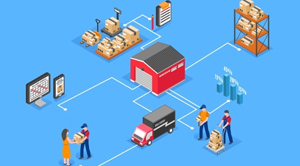 The modern 3PL is developing and implementing new technologies to increase consumer demand.
FREMONT, CA : Providers of third-party logistics (3PL) have a long history of delivering facilities to help navigate the supply chain. In order to keep up with customer demand, modern 3PLs have evolved their offerings and integrated technology. Similarly, shippers are turning to technology-enabled 3PLs to improve overall performance and maximize efficiency. The overlap of technology and logistics offers an end-to-end supply chain approach.
Stay ahead of the industry with exclusive feature stories on the top companies, expert insights and the latest news delivered straight to your inbox. Subscribe today.
Why Should Companies Use A Technology-Enabled Third-Party Logistics Provider?
Increase in Supply Chain Visibility
As part of more substantial company cost-saving programs, shippers are under pressure to decrease supply chain expenses. Shippers want their supply chain managers to have more resources and accountability, preferably without growing the budget. Several 3PLs and supply chain managers have switched to wireless technologies and cloud computing to simplify systems and boost accuracy for their customers to adapt to the already changing technology environment. Technology is a standard automatic identification method and data capture, such as radio-frequency identification (RFID). RFID tags can be applied to an entire pallet, inventory, or almost any item, and the opportunities for tracing are broad and relevant to many areas of the supply chain.
Integration of Multiple Platforms
Integration between 3PLs and the software systems of their clients enables efficiencies and increases response times. Service problems can be dealt with directly and transferred to the right response team. Obstacles can arise, so quick response times are essential. To shape a single management framework that allows customizable reporting and solutions, providers can integrate their TMS or WMS with client systems. To exchange information with clients and other relevant parties, the right provider can utilize EDI (Electronic Data Interchange). EDI prevents incorrect data entry and enhances performance, and enables the provider to give consumers real-time alerts.
The Internet of Things (IoT)
The groundbreaking technology enables devices without human interference to communicate with each other inside an established internet system, devices of all kinds like tablet computers, sensors that track machinery or cars, or even wearables. It helps planners know what's on hand in warehousing and exactly where it's stored in the warehouse. Sensors can report anything from remaining fuel levels, tire quality, and conditions inside a container in IoT enabled trucks. The use of connected devices, other innovations, and the supply chain's preparation are moving ahead, creating significant cost savings.
More in News
