

THANK YOU FOR SUBSCRIBING


Logistics Tech Outlook Weekly Brief
Be first to read the latest tech news, Industry Leader's Insights, and CIO interviews of medium and large enterprises exclusively from Logistics Tech Outlook

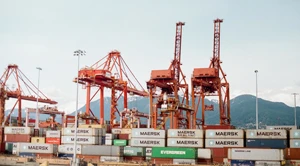 Companies can enhance their operations and compete in any fast-paced industry by incorporating the right supply chain management software necessary for the business.
FREMONT, CA: Today's supply chains are vast, accounting for 37 percent of a nation's entire jobs. Businesses are shifting to supply chain management software to manage these large operations. Companies can use this software to efficiently gather raw materials and control product cycles by automating error-prone processes and centralizing data for decision-making.
Stay ahead of the industry with exclusive feature stories on the top companies, expert insights and the latest news delivered straight to your inbox. Subscribe today.
The company's leadership will better understand where every resource is and how deliveries will be made with better supply chain management (SCM). As a result, improved efficiency, higher profit margins, more flexible business processes, and better end-to-end supply chain visibility can be accomplished.
But before organizations invest in a system, they must first evaluate which supply chain management software components are necessary for the business. Companies may improve their operations and compete in any fast-paced industry by implementing a tool with the required elements.
Top Features & Requirements
[vendor_logo_first]
Monitoring and Planning
Many types of supply chain monitoring successfully monitor the flow of materials and commodities through a company's supply chain. SCM systems give information such as shipping date and time, ID and order numbers, freight data, and more to improve supply chain visibility. Businesses can use this information to monitor the key performance indicators (KPIs) and make more strategic choices. Tracking the supply chain should also include a unified dashboard for managing the business operations. To better understand each step, examine all the procurement, production, and logistics processes in one location.
Warehouse Management
A warehouse management system (WMS) gives physical warehouse operations a more accurate level of control. This SCM solution allows users to view the warehouse as a physical environment or as a "designed organism," allowing them to better control the outcome within the warehouse. These systems assist with every aspect of the equation, such as labor, materials, floor space, and operating protocols, and everything else that goes into making a warehouse run smoothly daily.
Transportation Management
The systems that manage supplies in transit are directed by transportation management software. This is often a combination of over-the-road fleet management technologies with monitoring for other modes of transportation, like rail, air, or marine shipping. Tracking shipments enables businesses to see problem areas in advance, giving them the best chance of getting back on schedule.
See Also:
More in News
