

THANK YOU FOR SUBSCRIBING


Logistics Tech Outlook Weekly Brief
Be first to read the latest tech news, Industry Leader's Insights, and CIO interviews of medium and large enterprises exclusively from Logistics Tech Outlook

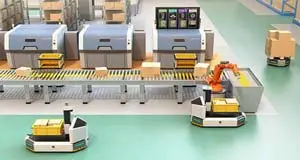 Machines excel at doing repetitive tasks, and with the internet of things, they can access data to improve their efficiency even more.
FREMONT, CA: Warehouse management systems have been around for a long time, but Internet of Things (IoT) technology takes them to the next level. IoT Warehouse Management System (WMS) uses sensors and tags on materials and products to track them throughout the warehouse. Facilities will have a connected, accessible system that tells them where everything is and what it is doing.
Stay ahead of the industry with exclusive feature stories on the top companies, expert insights and the latest news delivered straight to your inbox. Subscribe today.
The IoT can be used for everything from storage to delivery. Autonomous vehicles, robotics, quality-tracking sensors, and environmental controls are some of the most recent applications. Because of the versatility of these technologies, the material handling equipment market might be worth 200 billion dollars by 2025.
Safety
Improved safety is one of the most significant advances the Internet of Things will bring to material handling. This can be a dangerous line of work depending on the sorts and quantities of materials a business works with. Automation and monitoring technologies, which are part of the IoT, can help manage risks.

A 55-gallon drum can weigh anything from 400 to 600 pounds, easily injuring someone. The greatest approach to keeping workers safe is to remove them from the problem, precisely what IoT-enabled autonomous vehicles accomplish. Self-driving forklifts and pallet jacks can be guided, and their performance monitored using the connected infrastructure.
Predictive maintenance is another benefit of IoT sensors, which helps warehouses avoid the dangers of unexpected breakdowns. These sensors can alert personnel when a problem arises by monitoring the inner workings of machinery. They will be able to address minor issues before they become more severe and hazardous.
Efficiency
Many of the same technologies that help with material handling safety also help with efficiency. IoT-enabled automation is a great example of a solution that solves two problems at the same time. Robots not only make things safer for workers, but they also help them complete duties more quickly.
In some warehouses, autonomous vehicles assist workers in loading and unloading cargo. Machines excel at doing repetitive tasks, and with the IoT, they can access data to improve their efficiency even more. People could complete a task half the time it would take them if they did not have these robotic assistants.
IoT sensors installed across a warehouse can collect data on several processes. WMS may then use this information to identify any inefficiencies in the plant. Managers can then use the information to improve inefficient operations and create a more efficient materials handling strategy.
See Also:Top 10 Contact Center Solution Companies
More in News
